Driveways built on a base designed for cars, across Amsterdam, Amstelveen, Badhoevedorp and Almere
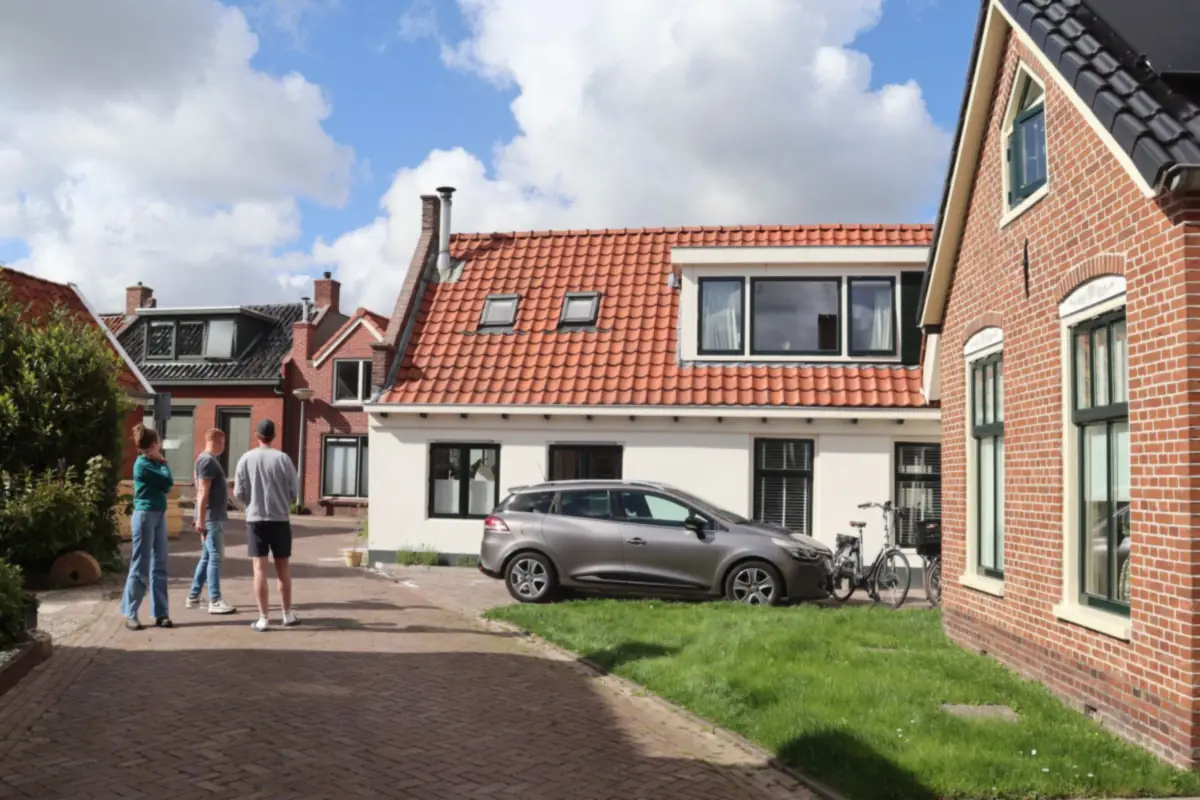
With driveways in Amsterdam, the first job isn't choosing the bricks. It's finding out whether you're allowed to park there at all. The city's omgevingsplan (its zoning and local rules plan, being rolled out area by area) only allows a car on the grounds of a home if it sits in a garage or carport, or if there's already an inrit, a crossover that links the pavement to your plot. If there isn't one, you need an uitweg permit (the permit for a driveway exit across the pavement) first. We check this with you during the free site survey. Only then do we talk about the build: a base about 30 centimetres deep, pavers at least 6 centimetres thick and heavy kerbs along the edges.
Book a free driveway survey
- 1Give us your address and tell us whether there's a dropped kerb already
- 2We visit, measure up and note trees, lampposts and cables on the pavement
- 3You get a written quote with a fixed price per m² and the full build-up
- Free site survey
- Fixed price in writing
- KLIC utility check done
- Foundation built to suit
- English & Nederlands
Why it matters
What a properly built driveway in Amsterdam gives you
A car rests on four patches of rubber about the size of your hand, and every time you turn the wheel it twists the pavers underneath. A driveway built for that keeps its shape. A patio pressed into service as a driveway doesn't.
No trouble with enforcement
Before anything else we check whether your address falls under article 2.7 of Amsterdam's omgevingsplan and whether a crossover exists. That way you don't pay for a driveway you then can't park on.
No ruts
We build on 30 centimetres of foundation rather than the 20 that's fine for a patio, using coarse crushed stone or broken rubble. Tyres don't press grooves into the surface.
Edges that stay put
We use 8 x 20 x 100 centimetre edging kerbs (opsluitbanden), set 2 centimetres below the paving. Slim garden edging gets shoved sideways by a turning wheel within a few years.
Pavers that don't drift
Herringbone and elbow bond lock into each other. Stretcher bond is quicker, but the Dutch brick federation KNB warns it creeps in the direction of travel, and you drive the same line every day.
Made for the garden suburbs
Buitenveldert, Elsrijk in Amstelveen, the Vogelbuurt in Badhoevedorp and Almere's low-rise streets have room for a private driveway. That's where most of our driveway work is. The canal belt is a different story.
Solid on clay too
Haarlemmermeer and Almere sit largely on clay, which drains poorly. On that kind of subsoil KNB recommends a frost-free depth of about 80 centimetres, so we assess each address separately.
1
point of contact from survey to handover
m²
quotes itemised per square metre
KLIC
cable and pipe check before we dig
€0
for the site survey and advice
From kerb to front door
How we build driveways in Amsterdam and nearby
A driveway has one step that ordinary paving doesn't: the permit. It's built into the sequence below, because no digger starts until the crossover is approved.
- 01
Survey and rules check
We visit for free, measure the driveway and look at what stands on the pavement: a tree, a lamppost, a utility cabinet. We also look up together in the Omgevingsloket (the national permits portal) what the plan says for your address.
- 02
A quote that shows the build-up
You get a fixed price per m², with the foundation depth, the type of paver, the kerbs and the laying pattern written down. If a permit is involved, the quote says what we supply for it.
- 03
Permit and KLIC notification
A new crossover needs an application with its location, dimensions, materials and any obstacles. Once that's sorted we file the KLIC notification with the Kadaster, the legal check for buried cables that's required before machine digging, between 20 and 3 working days ahead.
- 04
Digging out and the base
We excavate to about 30 centimetres below the new surface level, deeper on clay where needed. A layer of coarse crushed stone or broken rubble goes in and is compacted with a plate until it no longer gives.
- 05
Setting the kerbs
The heavy edging kerbs go in firmly all round, 2 centimetres lower than the finished pavers. They hold the whole surface together as a car turns on and off it.
- 06
Bedding layer and pavers
A 3 to 5 centimetre bed of clean sand is screeded level but not compacted. The pavers go on top in herringbone or elbow bond, with a fall of at least 1 centimetre per metre, and then the whole area is vibrated in.
- 07
Jointing and handover
We brush lime-free crushed sand into the joints, let it settle for a few days and top it up. At handover you drive on it with us there, and we take away every bit of soil and offcut.
- →
What next?
Start at step 1: a visit to measure up. Free, and you are not committing to anything.
Book a survey →
Commitments you can reread
What we promise is written down
Paving that starts to ripple after one winter is rarely a problem with the stones on top. The fault sits underneath: too little sand, a sub-base that was never compacted, or edging that gets pushed out the first time a car rolls over it. That is why our quote spells out more than the stone you are getting. It also states how deep the foundation goes, what we raise the level with and how the edges are held in place.
It also keeps any complaint simple. If part of the paving works loose or a strip sinks because of the way we laid it, we come back and put it right. Settlement caused by the ground itself is a different matter - peat under Amsterdam slowly compresses whatever anyone does - and we would rather tell you that up front. What we can do is build it so that raising the level later means lifting and relaying the stones, not starting again from scratch.
In writing
foundation, materials and edging are all in the quote
We return
if our workmanship is the cause, we fix it
Before you choose
Choosing a contractor for driveways in Amsterdam
Don't accept a driveway price based on a photo. A photo shows the garden. It doesn't show the tree roots under the pavement, the height difference with the road, or the street sign standing right where your crossover would go. Those things decide whether your permit has a chance and how much digging the job needs. A contractor who won't come and look can't answer those questions for you.
Ask about the build-up and get it written into the quote. Paver manufacturer Excluton specifies 30 centimetres of foundation for a driveway, including the bedding layer, against 20 for a patio or path. Wienerberger recommends coarse crushed stone or broken rubble with paving sand for the base, and a 20 to 30 centimetre sand bed compacted with a plate. The bedding layer on top, 3 to 5 centimetres, should only be screeded. If the quote just says 'sand bed', ask more. You won't see the difference on day one. You will after a wet winter.
Then look at the product. For driveways Excluton calls for pavers at least 6 centimetres thick, with spacer nibs and a chamfered edge, never laid in random bond and no larger than 60 x 60 unless reinforced. Clay pavers carrying a KOMO certificate under BRL 2360 meet NEN-EN 1344, and concrete pavers fall under NEN-EN 1338 and BRL 2312. A contractor who knows those numbers usually knows why they matter.
Compared
Driveways in Amsterdam: clay pavers against the alternatives
What goes under the wheels decides how often you'll be back for repairs. This comparison assumes a correctly founded driveway. Figures are indicative material prices from Dutch price guides, not a quote.
| Clay pavers | Concrete pavers | Grass pavers | Gravel | |
|---|---|---|---|---|
| Lifespan | Decades on a good base, colour holds | Decades, surface can wear over time | Long, as long as the units stay level | Needs topping up from time to time |
| Coping with a car | Good in herringbone or elbow bond | Good from 6 cm thickness | Suitable, per the Dutch permeable paving guidance | Ruts without stabilisation |
| Rainwater | Runs off via joints and fall to the garden | Runs off via joints and fall to the garden | Mostly soaks into the ground | Soaks into the ground |
| Upkeep | Top up joint sand now and then | Top up joints, occasional clean | Mowing and reseeding | Raking and weeding |
| Indicative material price | €40-60/m² | €20-40/m² (waaltjes) | On request | €10-12/m² |
| Uitweg permit | Needed for a new crossover | Needed for a new crossover | Needed for a new crossover | Needed for a new crossover |
Pattern and paver
A driveway in Amsterdam that looks right and stays flat
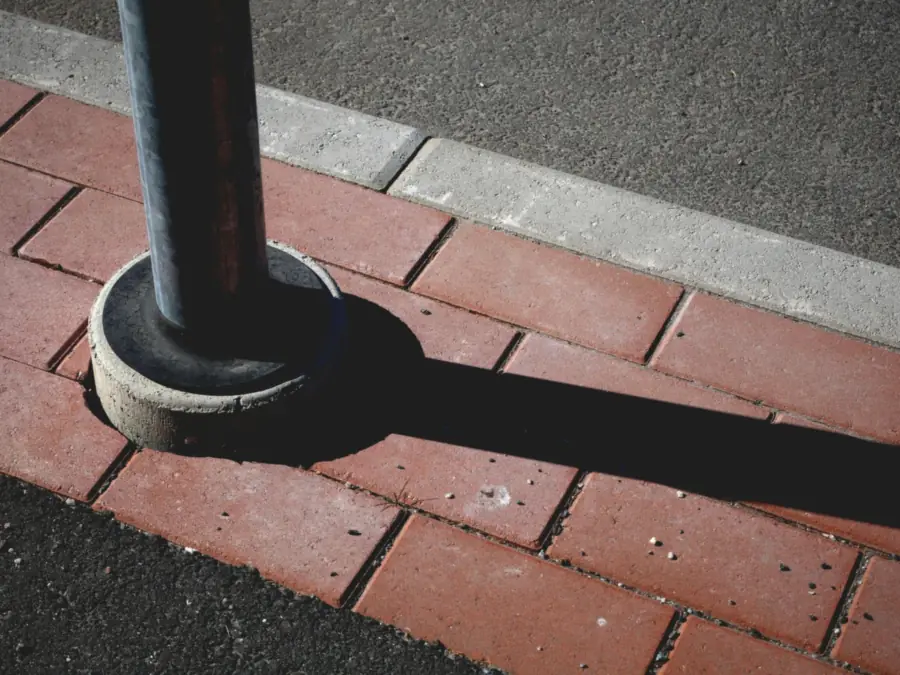
On a driveway the laying pattern isn't only about looks. Wienerberger calls herringbone and elbow bond very stable and so particularly suited to driveways. Herringbone does need pavers of consistent size, plus angled cuts along the edges that Dutch pavers call 'bisschopsmutsen' (bishop's mitres). That means more cutting, and you'll see it in the price.
- Herringbone: the strongest pattern, with angled cuts along the edges
- Elbow bond: named by KNB for garden driveways
- Thicker dikformaat or keiformaat clay pavers for a heavier look
- Roughly 5% extra pavers for cutting waste, priced in from the start
- No random bond and no large slabs without reinforcement
"In a good share of the driveway enquiries we get, the garden has already been paved in the owner's head while nobody has looked at the pavement yet. Whether a crossover is allowed matters more than which paver you pick."
Cost
How much do driveways in Amsterdam cost?
A driveway costs more per square metre than a garden path, and the reason is simple: more goes underneath. Half as much foundation again, a thicker paver, heavy kerbs and a pattern with more cutting all add up. Dutch price guides such as Homedeal put a complete driveway at €40 to €100 per m², without saying whether VAT (BTW) is included. You'll know your own figure after the free survey.
- €Foundation: 30 centimetres of crushed stone or rubble means more material and more spoil to remove than the 20 under a path
- €Pavers: Homedeal puts clay pavers at roughly €40-60/m² for materials and concrete waaltjes at roughly €20-40/m²
- €Edging kerbs: Homedeal quotes €5-10 per running metre, and a driveway has them on both sides
- €Ground: on the clay of Badhoevedorp or Almere Buiten we may need to dig deeper, and in Almere's Regenboogbuurt some streets sank more than half a metre in 25 years
- €The pavement: permit fees, and in many Dutch municipalities the bill for dropping the kerb
Guide price from
€55/m²
Indicative guide price including 21% VAT, not a price list. Permit fees and any council charge for the pavement come on top. Your real price follows a free survey.
Ask for a fixed priceQuestions
Questions about driveways in Amsterdam
Can I pave my front garden in Amsterdam and park on it?
Not automatically. Article 2.7(2) of Amsterdam's omgevingsplan bans parking motor vehicles on the grounds of a home unless the car is in a garage or carport, or the existing layout of the street allows it, for example because there is already a crossover (inrit). Motorbikes, scooters and mobility vehicles are exempt. The plan is being introduced area by area, so check your address in the Omgevingsloket.
Do I need a permit for a new crossover?
Yes. Amsterdam requires an omgevingsvergunning (planning permit) for an uitweg under article 22.297 of its omgevingsplan. You supply the location of the exit (front, side or rear of the plot), its dimensions, the materials and any obstacles such as trees, lampposts and utilities. We provide the measurements and material details for the application.
Who builds the strip of pavement between the road and my driveway?
That strip is public ground. In many Dutch municipalities the council builds that section or lowers the kerb itself and bills the applicant. Ouder-Amstel, for example, charges permit fees plus planning costs for preparation and supervision. For how Amsterdam handles it in your district, call the city on 14 020. We build everything on your own land.
How long does an uitweg permit take?
It depends on the municipality. Ouder-Amstel, which covers Ouderkerk aan de Amstel and Duivendrecht, decides within 8 weeks, extendable once. You apply through the Omgevingsloket using DigiD or eHerkenning. Amstelveen and Diemen grant these permits as well. Wherever you live, expect it to take weeks and plan the build after it.
Why don't you recommend stretcher bond for a driveway?
Stretcher bond is quick to lay and needs little cutting, but KNB says it creeps in the direction of travel. On a driveway you brake and turn on the same spot every day, so the rows slowly shift. Herringbone and elbow bond lock together and stay put, which is why those are what we quote.
How thick should driveway pavers be?
Excluton specifies driveway products at least 6 centimetres thick, with spacer nibs and a chamfer. Anything larger than 60 x 60 centimetres needs reinforcement, and random bond is ruled out. So a paver that's perfectly fine on a garden path isn't automatically right for the driveway next to it.
Reviews
What our customers say
Judge us on paving that is already down.
We have only just started collecting reviews, and they will appear here as they come in. Until then, ask to see photos of recent work near you when we come out to measure up. A terrace two streets away says more than five stars.
Related
More paving work in Amsterdam
Service area
Driveways across Amsterdam and the surrounding towns
Inside the ring road a private driveway is rare. Outside it, much less so. We build driveways in Buitenveldert, Amstelveen and Diemen-Zuid, in Badhoevedorp and Hoofddorp, and in the low-rise neighbourhoods of Almere and Weesp.
- Amsterdam-Zuidoost
- Amstelveen
- Diemen
- Duivendrecht
- Ouderkerk a/d Amstel
- Abcoude
- Weesp
- Almere
- Badhoevedorp
- Hoofddorp
- Zaandam
- Purmerend
Find out if it's allowed, then dig
Book a free survey. We look at your pavement and your ground, check the rules for your address and give you a fixed price per m² with the full build-up written in.