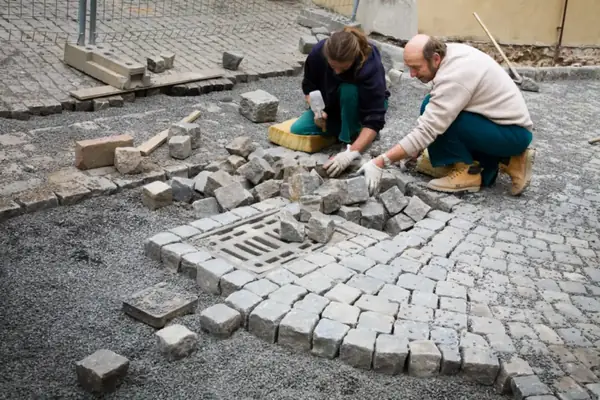
Paving
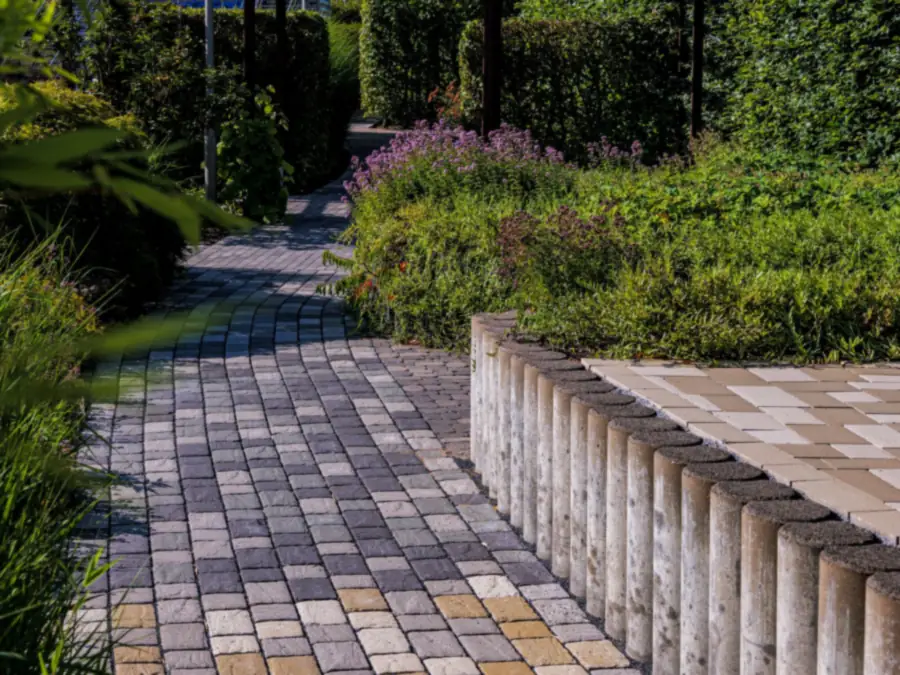
Clay bricks, concrete slabs or porcelain for paths, front gardens and back gardens. Laid on the right sand bed, falling away from the house, in a pattern that suits how the area is used.
Read more about paving →Paving & gardens, based in Zuidoost
In Amsterdam the garden sinks while the house stays put. Most homes stand on piles and the soil around them does not, which is why paving here so often ends up below the door sill after a few years. We lay paving in Amsterdam with that in mind: the build-up comes first, the stone second. We work from Bijlmer-Oost across every district and the neighbouring municipalities, in English or in Dutch.
1
point of contact from survey to handover
m²
quotes itemised per square metre
KLIC
cable and pipe check before we dig
€0
for the site survey and advice
What we do
Six kinds of job, one way of working: measure up, decide the build-up, put it all in writing and only then start digging. Each service page has the detail, prices and common questions.
Clay bricks, concrete slabs or porcelain for paths, front gardens and back gardens. Laid on the right sand bed, falling away from the house, in a pattern that suits how the area is used.
Read more about paving →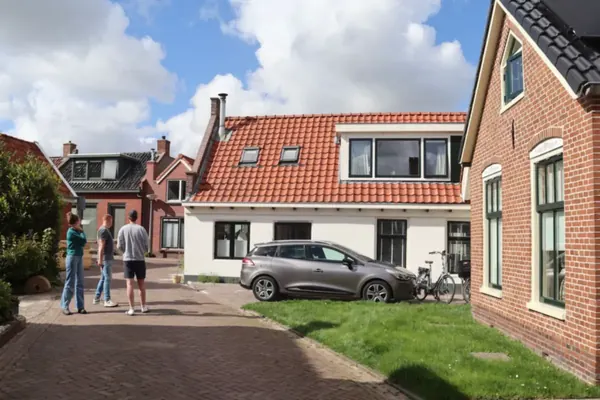
A driveway carries a car weighing well over a tonne, every day. That takes a deeper foundation, solid edging and an exit permit from the municipality.
Read more about driveways →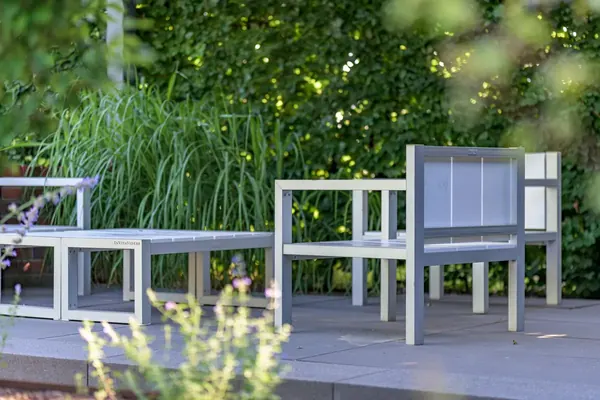
A terrace that meets the wall neatly, sits just under the door sill and sends rainwater the right way. In concrete, porcelain or natural stone.
Read more about patios & terraces →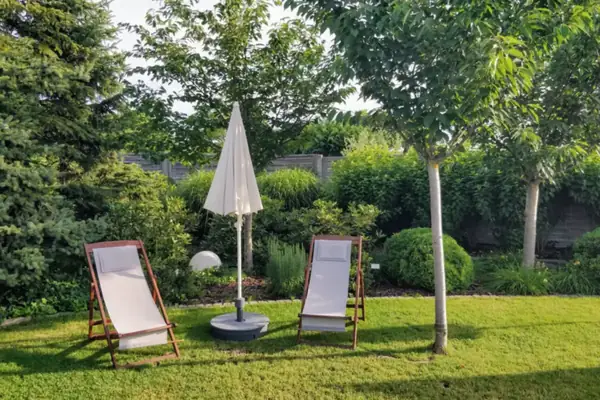
The whole garden in one plan: path, terrace, borders, lawn and somewhere for the water to go. Including when you want the tiles out for Amsterdam's greening grant.
Read more about landscaping →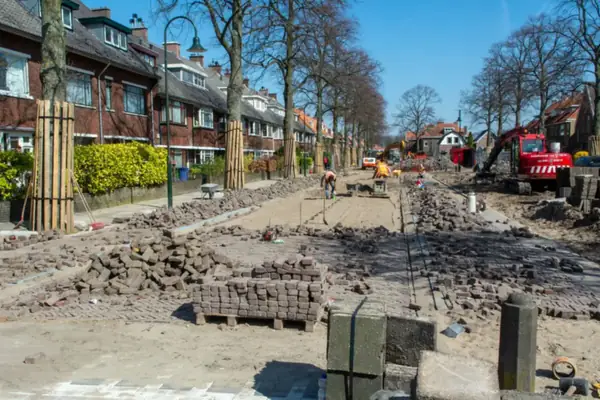
Has your garden dropped away from the house? We lift the paving, build the level back up with sand and relay your own stones wherever they are reusable.
Read more about paving re-levelling →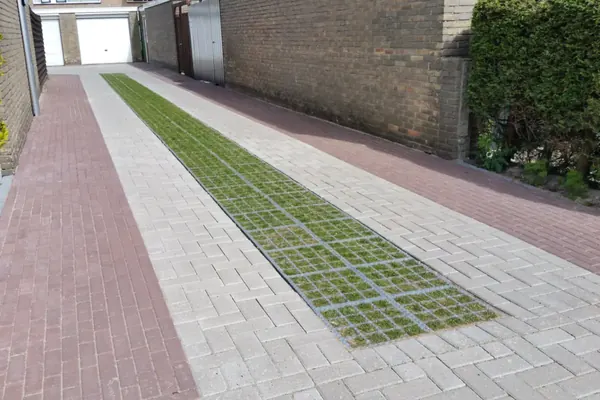
Wide-jointed bricks, grass-concrete blocks or porous pavers that let rain soak away instead of running to the drain or your back wall.
Read more about permeable paving →Why it's different here
A paving slab is the same everywhere. The ground beneath it is not. Respect the soil under Amsterdam and the garden stays good for years. Ignore it and you get a couple of seasons.
In 2022 Deltares measured the ground near Krulslaplantsoen in Bijlmer-Oost dropping by 1.7 to 6.3 millimetres a year. A properly compacted base stops ruts and hollows forming on top of that.
A fall of at least one centimetre per metre sends rain away from the house. That means no puddle at the back door and less damp against the brickwork, which matters in areas with high groundwater.
KNMI records an average of about 43 frost nights a year at Schiphol. Joints packed with crushed sand and stones bedded evenly cope with that without lifting.
Bricks and slabs laid on sand can be lifted, raised and put back. When the ground drops again you pay for relaying, not for a brand-new garden.
A smaller terrace with a generous border soaks up more rain. Take out at least 10 m² of tiles and the City of Amsterdam may pay €15 per m², up to €1,000 per home.
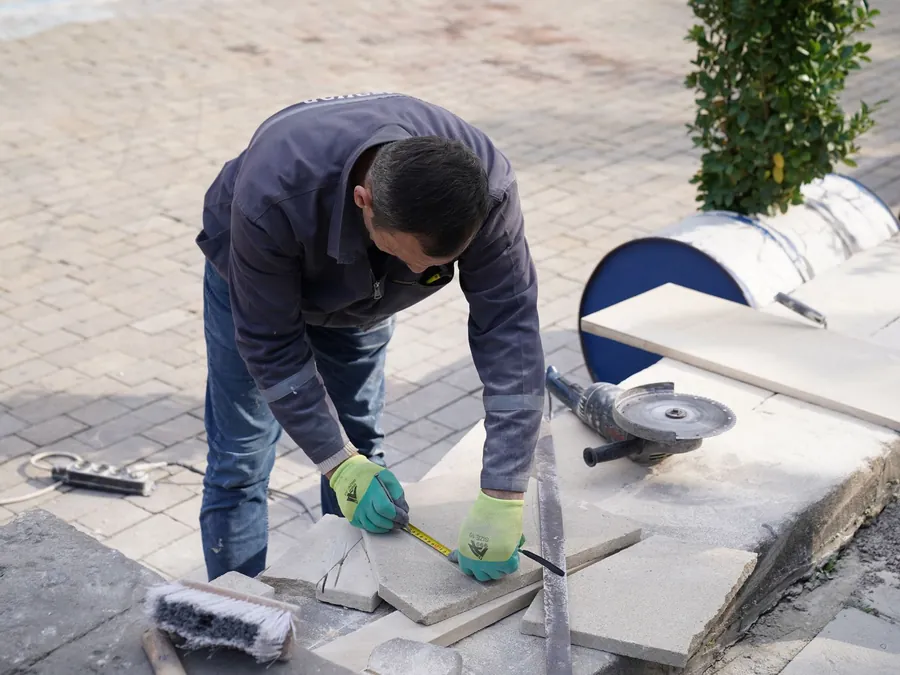
Quote, schedule and the explanations on site come in English or Dutch. Useful when you are new to Amsterdam and terms like 'opsluitband' (kerb edging) mean nothing yet.
Why Hoogwaardige Bestrating
No promises about star ratings or decades in the trade. Just a way of working you can check for yourself.
The quote states how many centimetres of foundation, in which material, what edging and which laying pattern. You can hold every line up against another firm's price.
Before machine digging we file a KLIC notification with the Kadaster (the Dutch land registry), as the law requires. That tells us where the cables and pipes run before the bucket goes in.
Peat keeps settling, whatever anyone promises. We tell you up front what to expect and build so that topping up later stays simple.
A driveway exit across the pavement needs a permit, and Amsterdam's zoning plan restricts parking in a front garden. We tell you where you stand before you commit.
For the Subsidie Groen the city wants labour, materials and VAT shown separately. Our quotes are laid out that way as standard.
"In many of the gardens we measure up in Zuidoost and Noord, the problem isn't the stones but the layer beneath them. Relaying without raising the level only buys a few years."
How we work
A 30 m² back garden or a 60 m² driveway, the sequence doesn't change. What does change is how deep the foundation goes and how much the level needs raising. We only know that after step one.
We measure the area, check the height difference to the door sill, the state of the old paving and where water currently collects.
A price per m² including VAT, with the build-up spelled out: centimetres of foundation, sand, edging, laying pattern. No 'contingency' line that quietly grows.
For machine digging we file the KLIC notification at least three working days ahead. Then we set out levels and falls with string lines and pegs.
Old tiles up, soil out to the right depth, and the foundation compacted layer by layer. Roughly 20 cm for a terrace, nearer 30 cm for a driveway.
Kerb edging or a concrete haunch holds everything together. Without that edge the outer stones creep outwards over time.
The laying course is screeded, the stones go down in the chosen pattern, then compaction and jointing sand. We top the joints up again a few days later.
We walk it through with you, test the falls with water where we can, and take the old material away or stack it for the free municipal tile collection.
What next?
Start at step 1: a visit to measure up. Free, and you are not committing to anything.
Book a survey →Commitments you can reread
Paving that starts to ripple after one winter is rarely a problem with the stones on top. The fault sits underneath: too little sand, a sub-base that was never compacted, or edging that gets pushed out the first time a car rolls over it. That is why our quote spells out more than the stone you are getting. It also states how deep the foundation goes, what we raise the level with and how the edges are held in place.
It also keeps any complaint simple. If part of the paving works loose or a strip sinks because of the way we laid it, we come back and put it right. Settlement caused by the ground itself is a different matter - peat under Amsterdam slowly compresses whatever anyone does - and we would rather tell you that up front. What we can do is build it so that raising the level later means lifting and relaying the stones, not starting again from scratch.
In writing
foundation, materials and edging are all in the quote
We return
if our workmanship is the cause, we fix it
Materials
Each material has its own base and its own price. These are the six we lay most often, and we bring samples when we measure up.
In Dutch waal, dik or kei sizes. Colourfast, long-lived and very reusable when the level is raised.
Affordable and made in many sizes. For a driveway choose at least 6 cm thick.
Stain-resistant with crisp lines. Needs a stabilised bed and a precise layer.
Every slab slightly different. Suits older homes, at a higher purchase price.
Lets water through and goes down quickly. Gravel grids keep it comfortable to walk on.
A parking spot that looks green and takes in rain. Strong enough to park on.
Reviews
Judge us on paving that is already down.
We have only just started collecting reviews, and they will appear here as they come in. Until then, ask to see photos of recent work near you when we come out to measure up. A terrace two streets away says more than five stars.
Blog
8 October 2026
8 October 2026
Prices
Dutch price guides such as Homedeal and Trustoo put paving including materials at roughly €45 to €115 per m², depending on the stone. Laying alone usually sits between €20 and €40 per m². A driveway costs more than a path because there is more foundation underneath.
Amsterdam often adds something on top: sand to raise a sunken garden, or extra carrying when everything has to go through the hallway to reach the back. That shows up as its own line in our quote, not as a surprise at the end.
Indicative market prices from public Dutch price guides (2025/2026). Your fixed price follows the survey.
Questions
Much of Amsterdam sits on peat and clay that slowly compress. Homes usually stand on piles and hold their height, while gardens and streets drop with the ground. Deltares measured 1.7 to 6.3 millimetres a year in Bijlmer-Oost. A good foundation prevents ruts and hollows, but nobody can stop the ground itself from settling.
Paving within your own garden usually needs no permit. It is different for a listed building, in a protected townscape and for a new driveway exit across the pavement. If in doubt, run the permit check (vergunningcheck) for your address in the national Omgevingsloket.
Not automatically. Amsterdam's zoning plan (omgevingsplan) bans parking on a home's own plot unless there is a garage or carport, or the plot connects to the road through a driveway entrance. A new entrance needs an uitweg permit. The plan is being introduced area by area, so check your address in the Omgevingsloket.
An average back garden or driveway usually takes a few working days. The amount of raising needed and how easily we can reach the garden matter most. After the survey we put the expected duration in the quote.
Paving, driveway, terrace and garden work carries 21% VAT. The reduced 9% rate for labour on homes only covers insulation, painting, plastering and wallpapering. Plants are still at 9%, but move to 21% from 1 January 2028.
Yes. The survey, the quote and everything agreed during the work can be handled entirely in English. You are reading the English version of the site now, and the language switch at the top takes you to the Dutch one.
Service area
Our business unit is on the Daalwijkdreef in Bijlmer-Oost, a few minutes from Ganzenhoef metro station. From there we are quickly in Gaasperdam, Gein and Reigersbos, and we work just as often in the western garden suburbs, in Noord and in Buitenveldert.
Outside the city we cover Amstelveen, Diemen, Duivendrecht and Ouderkerk aan de Amstel, Abcoude, and further out towards Almere, Haarlemmermeer and the Zaan area. Every municipality has its own rules for driveway entrances, so we look those up per address.
Send us your postcode and a short description. We will measure up free of charge and give you a fixed price in writing, with the build-up included.